For years, fans across the globe have posed the question: Is Naruto Uzumaki somehow connected to the spiritual world of Bleach? It’s a natural curiosity, given the seismic impact both series had on anime and manga culture. However, to set the record straight right from the start, Naruto and Bleach are not directly connected. They exist in entirely separate fictional universes, each with its own distinct lore, characters, and overarching narratives.
This super pillar hub is designed to clear up any lingering confusion, exploring why this question often arises, and offering a comprehensive look at Naruto Uzumaki himself, alongside the separate, vibrant world of Bleach. We'll unravel the unique aspects of each series while celebrating their individual brilliance.
The Unbreakable Walls: Why Naruto and Bleach Are Separate Universes
The idea of a crossover between Naruto and Bleach is a common fantasy among anime enthusiasts, largely stemming from their shared status as part of the "Big Three" shonen titans of the 2000s, alongside One Piece. While all three captivated audiences globally and were published by Shueisha and animated by Studio Pierrot, their creators—Masashi Kishimoto for Naruto and Tite Kubo for Bleach—crafted entirely independent visions. There's no secret dimension portal or shared ancestor uniting a ninja village with the Soul Society; they are distinct works of creative fiction, celebrated for their unique contributions rather than any narrative overlap.
Diving Deep into Konoha's Hero: Who is Naruto Uzumaki?
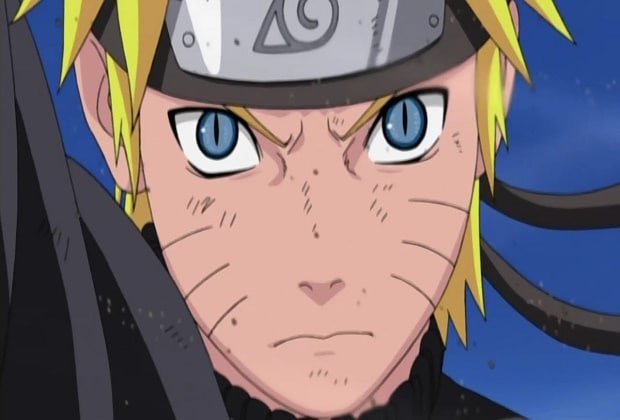
To fully appreciate the distinction, it's crucial to understand the protagonist of one of these titans: Naruto Uzumaki. He is not merely a character but a cultural icon, a jonin-level shinobi from Konohagakure, the Hidden Leaf Village, and the spirited heart of Team Kakashi. Born to the Fourth Hokage, Minato Namikaze, and the formidable Kushina Uzumaki, Naruto carries a heavy legacy, not least as the current incarnation of Ashura Otsutsuki and the third Jinchuriki of the Nine-Tailed Fox, Kurama. His journey from an ostracized orphan to an international hero is the bedrock of his story. For readers interested in delving into his age and specific physical attributes, his appearance—Minato's blue eyes, spiky blond hair, Kushina's face shape, and his signature whisker marks—is instantly recognizable.
His attire perfectly mirrors his vibrant personality. Typically, he's seen in an orange jacket with a high collar, black zipper, and a prominent red Uzumaki crest on the back. Completing his ninja uniform are a red Uzumaki armband, white tassel, black pants with orange stripes, black high-calf sandals, and a black bandanna forehead protector. Off-duty, he maintains his bright aesthetic with an orange-hooded sweatshirt. You can get a closer look at the evolution of Naruto Uzumaki's iconic outfits and attire to see how his style changed with his growth.
Naruto's personality is as bright as his clothing: exuberant, brash, energetic, and often heedless of formal understandings, famously punctuating his resolve with his mother's catchphrase, "Believe It!" Despite a childish fondness for his green-frog wallet "Gama-chan" and being a picky eater, his genuine kindness and fierce loyalty inspire deep friendships. His initial drive for acknowledgment through pranks evolved into a profound ambition to protect his loved ones, embodying the Will of Fire. This commitment solidified into his Nindo—never breaking his word—leading him to undertake immense risks. To better understand his complexities, consider unraveling the layers of his personality and character traits.
Cognitively, Naruto learns best kinesthetically, sometimes needing oversimplified analogies, yet he possesses a keen observational eye, noticing details others miss. In battle, he is a quick and inventive thinker, often improvising strategies and cleverly utilizing his techniques. His main tactic involves using Shadow Clones for confusion and outnumbering opponents, formulating multi-step plans and backups. For a deep dive into Naruto Uzumaki's unique fighting style and tactical brilliance, one can explore his innovative combat applications.
Pivotal life events, such as Jiraiya's death and Pain's invasion, profoundly shaped him. Grieving, he trained in senjutsu at Mount Myoboku, discovering his name's origin in Jiraiya's novel. Conversations with his father, Minato, exposed the shinobi world's cycle of hatred, leading Naruto to vow to end it and bring true peace. He fiercely rejected Obito's nihilism and affirmed the enduring power of bonds, a conviction hardened by Neji Hyuga's sacrifice. If you're interested in the pivotal life events and overarching philosophy that shaped Naruto Uzumaki into the hero he became, this section highlights his journey.
Naruto is considered one of the most powerful characters in his own narrative, possessing outstanding chakra levels, estimated at least four times Kakashi's. This immense power stems from his Uzumaki lineage, his Jinchuriki status, and his incarnation as Ashura. Initially poor at chakra control, he gained proficiency through sheer willpower, becoming a Ninjutsu Master capable of highly taxing techniques. He's also a formidable short-range Taijutsu fighter, known for his unpredictable attacks. Beyond raw power, Naruto exhibits enhanced strength, speed, reflexes, and immense durability, recovering quickly due to the Nine-Tails' accelerated healing and Uzumaki longevity. He is also an expert in Ninpo and exhibits an advanced growth rate, mastering complex techniques rapidly. His Indomitable Will allows him to resist Kurama's control and dispel Genjutsu without formal training. For a comprehensive overview, we encourage a deeper look into his incredible array of powers and abilities.
A master of Senjutsu, Naruto perfected Sage Mode, gaining orange eye pigmentations and yellow toad-like irides, which significantly enhance his capabilities. He uses Shadow Clones to gather natural energy, allowing for extended Sage Mode use. Furthermore, his unique spiritual awareness allows him to see and sense ghosts or spirits, a fascinating trait for those who want to understand Naruto's spiritual awareness and other unique abilities that set him apart. His transformations are equally iconic: the Nine-Tails Chakra Mode manifests as a flickering yellow chakra shroud, while Kurama Link Mode presents a more refined, haori-like appearance. Readers can find an in-depth explanation of all of Naruto's powerful transformation forms to appreciate their significance. Crucial to his power is the profound connection between Naruto, his Jinchuriki status, and the Nine-Tailed Fox, Kurama, a bond that provides him with immense strength and regenerative abilities.
Bleach's Spiritual Realm: A World Apart from Shinobi
In stark contrast to Naruto's world of ninja and chakra, Bleach unfolds in a narrative steeped in spirits, the afterlife, and spiritual energy known as Reiryoku. It centers on Ichigo Kurosaki, a human who gains the powers of a Soul Reaper, tasked with guiding departed souls (Pluses) to the Soul Society and purifying malevolent spirits known as Hollows. The hierarchies of the Soul Society, the intricate powers of Zanpakuto, and the distinct realms of Hueco Mundo and the Living World are foundational to its lore. These fundamental differences in setting, power sources, and mythical structures firmly establish Bleach as its own distinct universe. To fully grasp this unique setting, you can learn more about the distinct lore of the Bleach universe and the Soul Reapers who protect it.
Shared Shonen Spirit, Distinct Pathways: The "Big Three" Phenomenon
The "Big Three" designation points to shared genre elements rather than shared continuity. Both Naruto and Bleach exemplify the shonen genre's core tenets: action, adventure, coming-of-age stories, the power of friendship, intense rivalries, and protagonists striving to overcome adversity. While these tropes create a familiar and beloved experience for fans, they are universal genre conventions, not narrative bridges. For instance, while both series feature powerful, driven protagonists, a detailed comparison between Naruto Uzumaki and Bleach's protagonist, Ichigo Kurosaki would reveal their unique motivations, powers, and backstories within their separate worlds. Each series has also inspired its own successful spin-offs, like Boruto: Naruto Next Generations for Naruto and various light novels for Bleach, all remaining within their original universes.
Character Spotlight: Kakashi Hatake's Unique Role in Naruto
To further clarify the separation, consider a character like Kakashi Hatake. He is exclusively a product of the Naruto universe—the enigmatic, powerful sensei of Team 7, renowned for his Sharingan eye and his role as a brilliant tactical ninja and mentor. While Bleach certainly features its own compelling mentor figures, such as Kisuke Urahara or Captain-Commander Yamamoto, there is no direct equivalent or crossover of Kakashi. His unique skillset, backstory, and impact are confined to Konoha's story. If you're intrigued by this iconic character, you can explore everything you need to know about Kakashi Hatake's presence and role in Naruto's world.
Bridging Fandoms, Respecting Canons
While the worlds of Naruto and Bleach do not intersect in canonical storytelling, the passion of fans often creates its own bridges through fan fiction, art, and hypothetical "what if" scenarios. This creativity is a testament to the enduring appeal of both series. It's important to differentiate these fan-made narratives from the official, established canons created by Kishimoto and Kubo. Both sagas stand strong on their own merits, offering rich worlds and compelling characters that continue to inspire and entertain millions.
Ultimately, Naruto Uzumaki belongs to the world of shinobi, pursuing his dream of becoming Hokage and bringing peace to a war-torn world. Ichigo Kurosaki, conversely, guards the balance between the living and the dead, protecting both from spiritual threats. Each journey is epic, powerful, and deeply rewarding in its own right, proving that a direct connection isn't necessary for these stories to be legendary. We encourage you to enjoy them both for the independent masterpieces they are.